Article · Surveillance de maisons et résidences
El punto ciego de 67 millones de dólares
Qué ocurre cuando nadie supervisa su residencia: diez años de reportes de Home Watch de Valmore en más de 350 propiedades y la economía del tiempo de detección.
Mario J Panizza — Valmore Management & Staffing · 22 septembre 2026 · 8 min de lecture

Valmore field intelligence · 10-year review
The $67 Million Blind Spot
What 350+ residences reveal about detection time, property scale and the clauses owners often discover too late.
Executive summary
The loss rarely begins dramatically. It begins quietly — and becomes expensive while no one is looking.
Two distinct scopes: Valmore’s findings reflect residences observed across six countries. The insurance discussion below concerns recurring provisions in U.S. homeowners policies; wording, deadlines and outcomes vary by state, carrier, policy form and endorsement.
Read your policy before leaving
There is no universal 14-day notice rule. The actual clock depends on the policy and jurisdiction.
Across the United States, homeowners policies commonly require “prompt” or “immediate” notice and reasonable steps to protect the property, but the exact language and legal effect vary. A separate 14-day provision appears in some widely used policy forms as part of an exclusion for constant or repeated seepage or leakage; it is not a nationwide deadline for reporting every claim.
How it actually works as time passes
Do not assume. Ask the broker and carrier, in writing, what applies to this residence.
01 — The evidence
Nearly three in four detections were more than minimal.
Across ten years of Valmore field reports in six countries, recorded conditions were associated with approximately $67 million in repair exposure and corrective work. This is documented exposure — not a claim that every dollar was ‘saved.’
42% reached the two most serious levels
Recorded detections by severity
02 — Time changes the economics
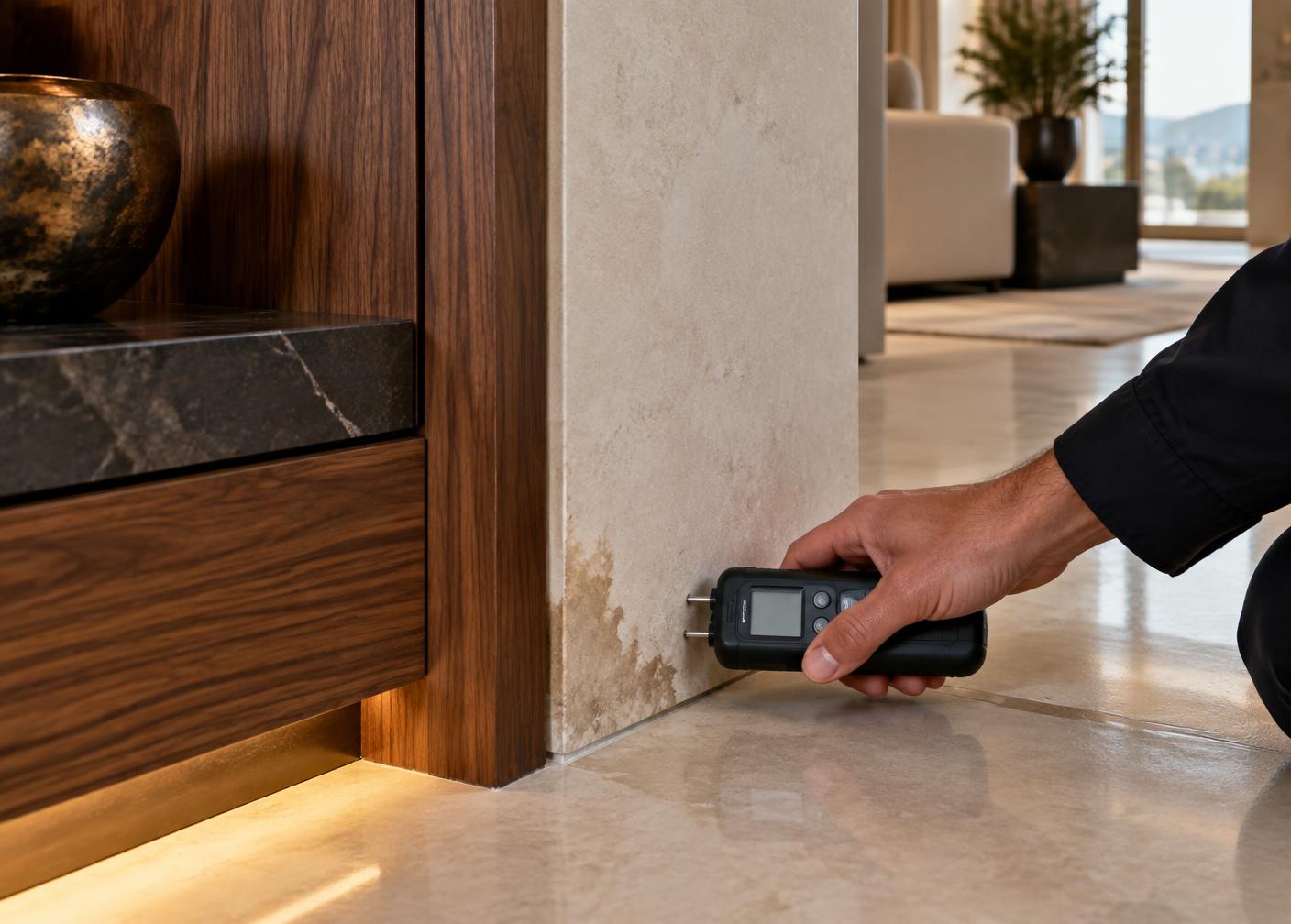
The first 48 hours
EPA guidance recommends drying wet materials within 24–48 hours and keeping indoor relative humidity below 60%, ideally 30–50%. Physical inspection turns an invisible exception into an accountable response.
Where frequency and consequence meet
Valmore illustrative operating model — not actuarial incidence data. Frequency varies by property, system age, climate and maintenance.
03 — Scale the inspection, not the promise
Square footage is a proxy. Systems are the real workload.

The honest annual baseline
52 weekly visits · approximately $1,083 per calendar month before approved term discounts, travel, add-ons or a property-specific scope.
The relevant question is not only what Home Watch costs. It is: if a loss begins today, who will know, how quickly, and what happens next?Download the bilingual study (PDF)
Editorial information only; not insurance, legal, engineering or remediation advice. Coverage depends on the policy as issued. Review the declarations, forms and endorsements with the licensed broker, carrier and professional advisers.
HomeWatch FamilyOffice UHNW EstateManagement GestionPatrimonial