Artículo
Three Years. That’s All Your Estate Manager Will Stay — And It Will Cost You $500,000.
Average tenure in private service has collapsed from twenty years to three. The turnover bill lands in OPEX and CAPEX, not in the staffing budget.
Valmore Management & Staffing · 16 de septiembre de 2026 · 2 min de lectura
El estudio visual completo
Tres años. Es todo lo que durará su Estate Manager — y le costará quinientos mil dólares.
Las 12 páginas originales del informe, presentadas íntegramente.
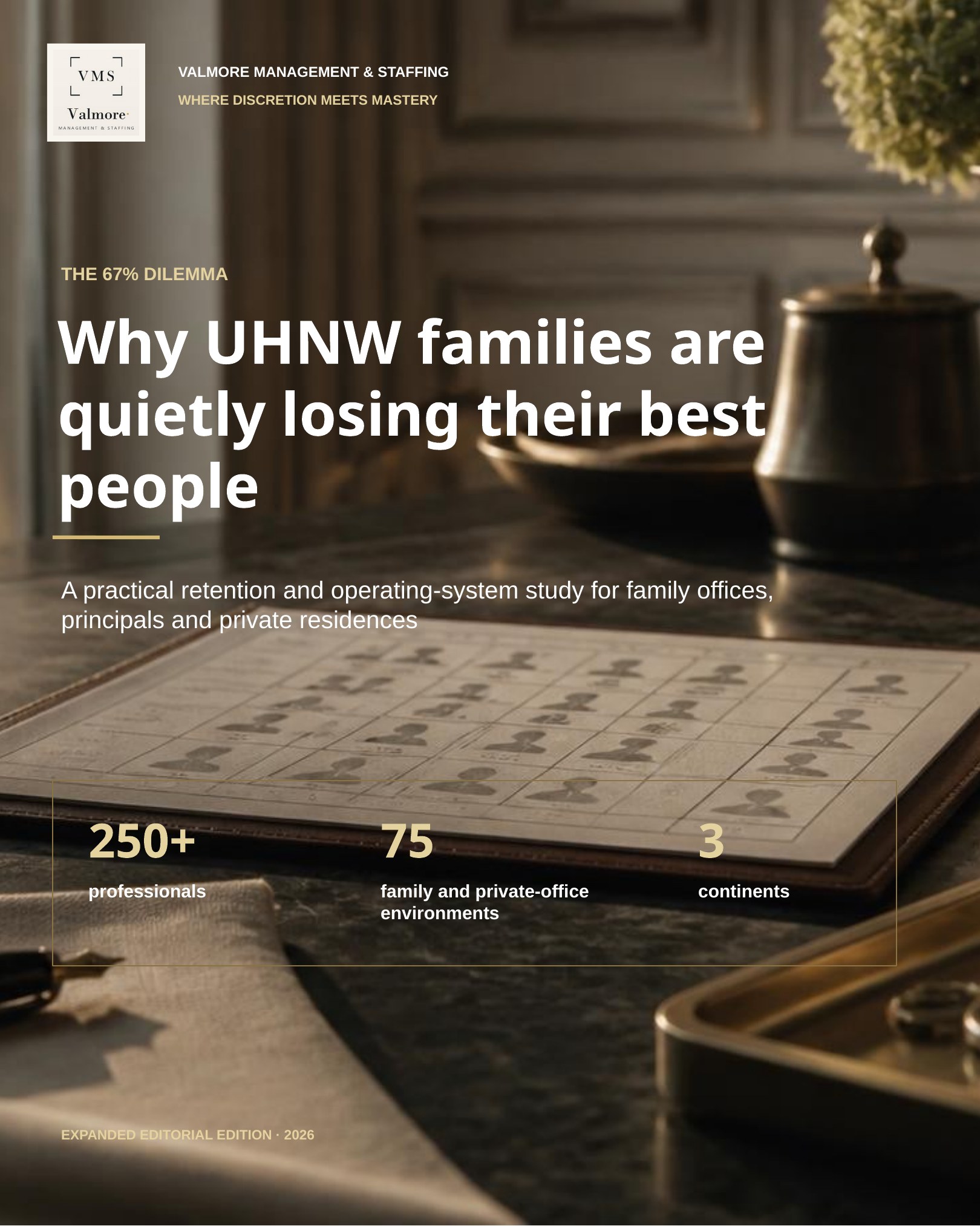
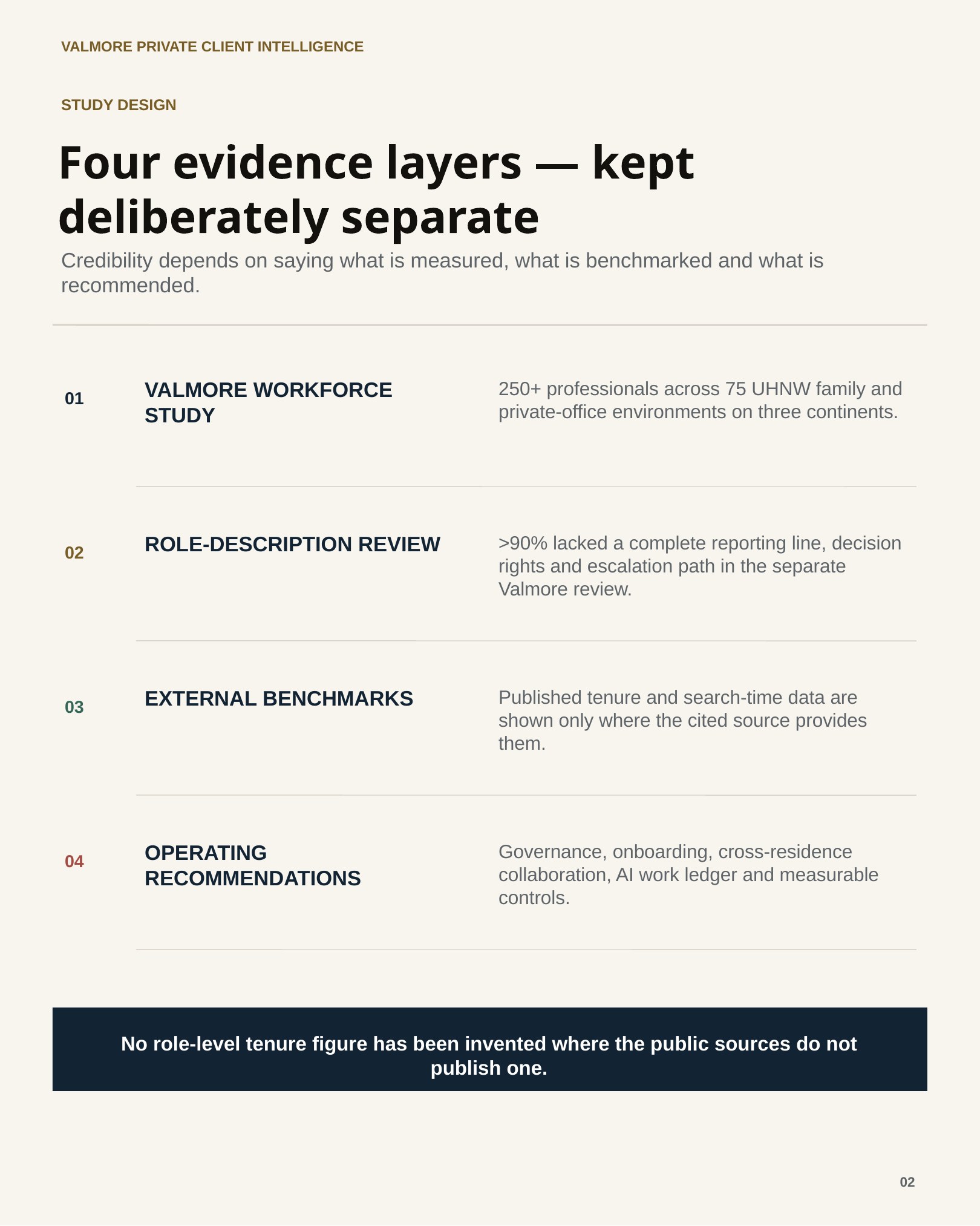
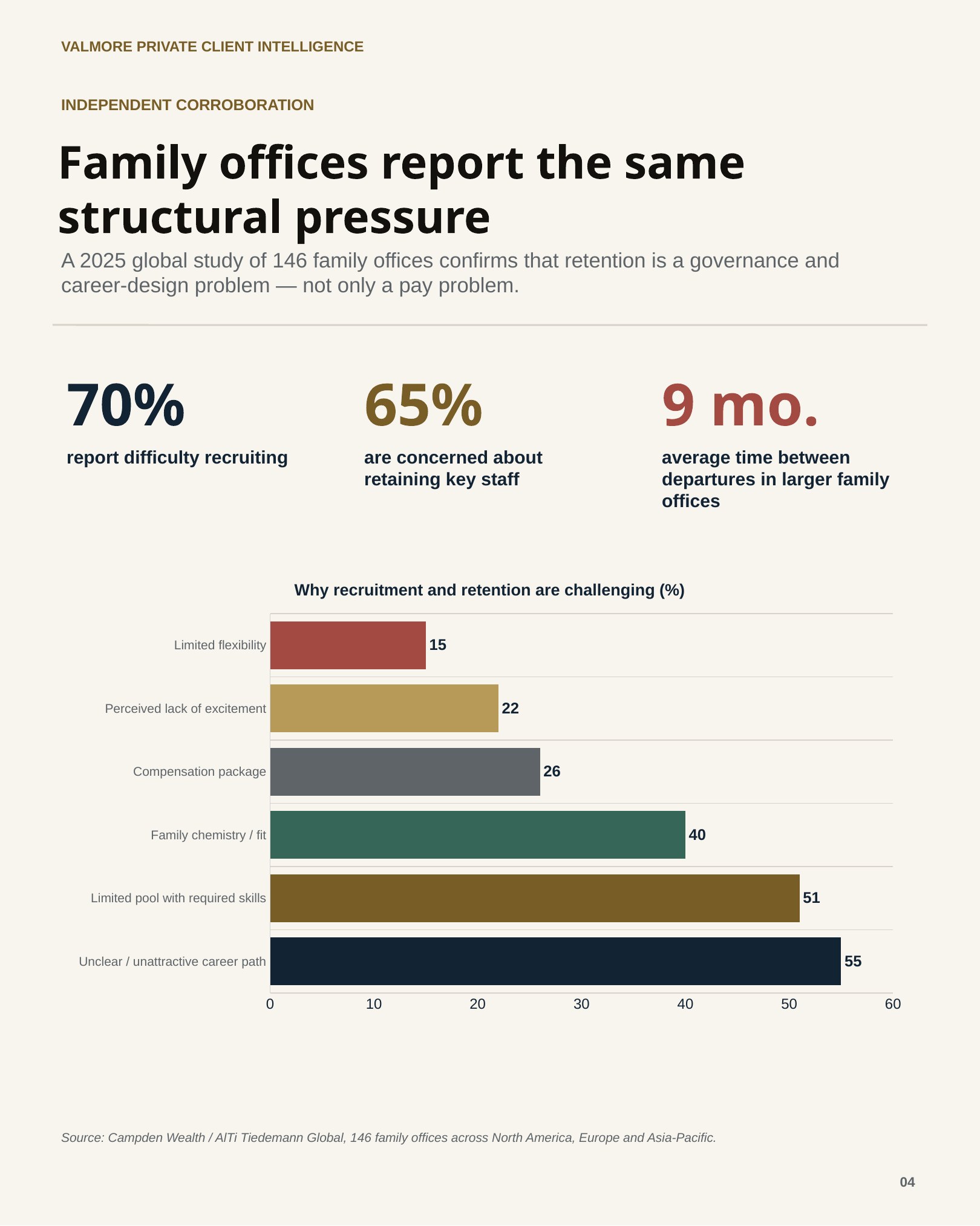
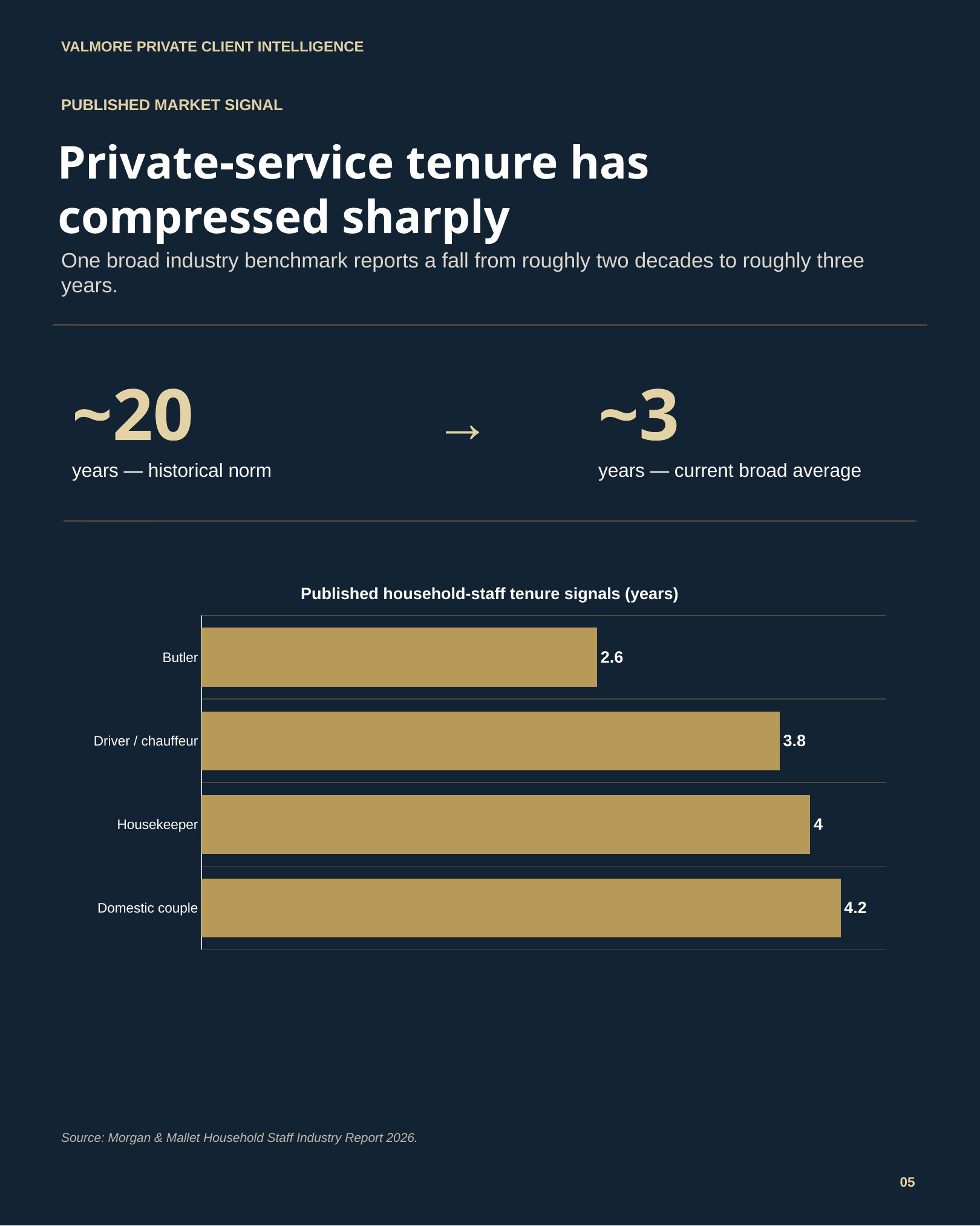
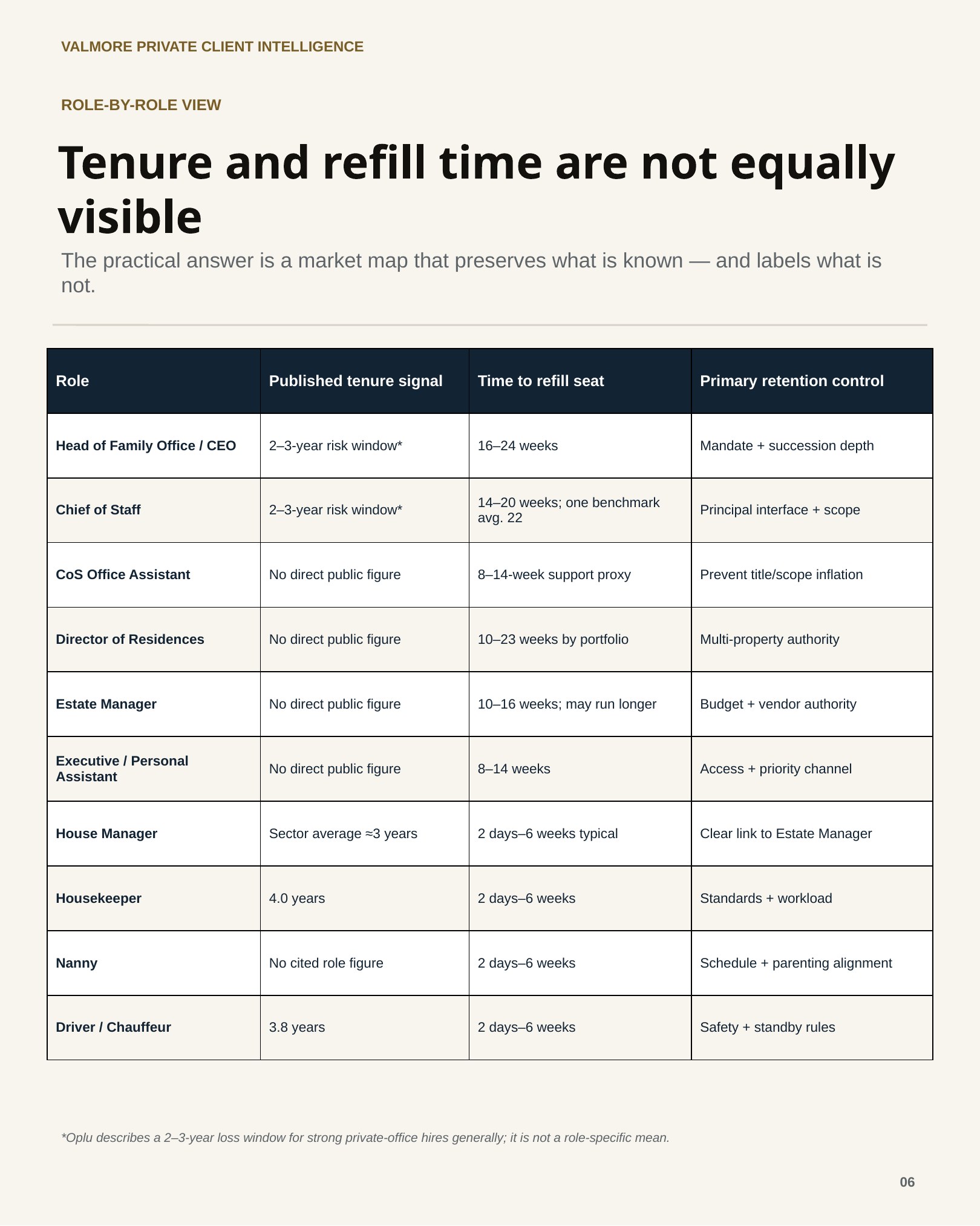
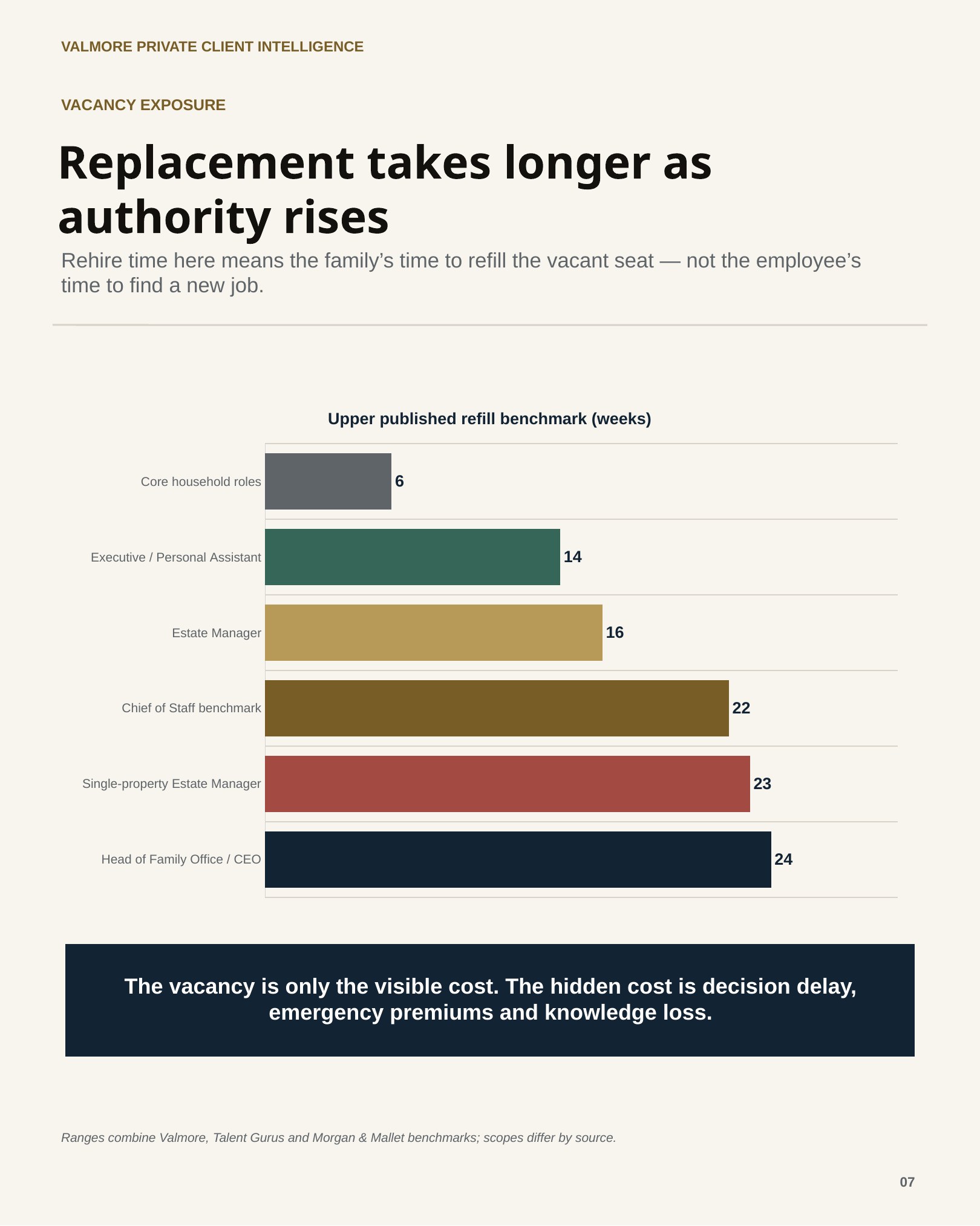
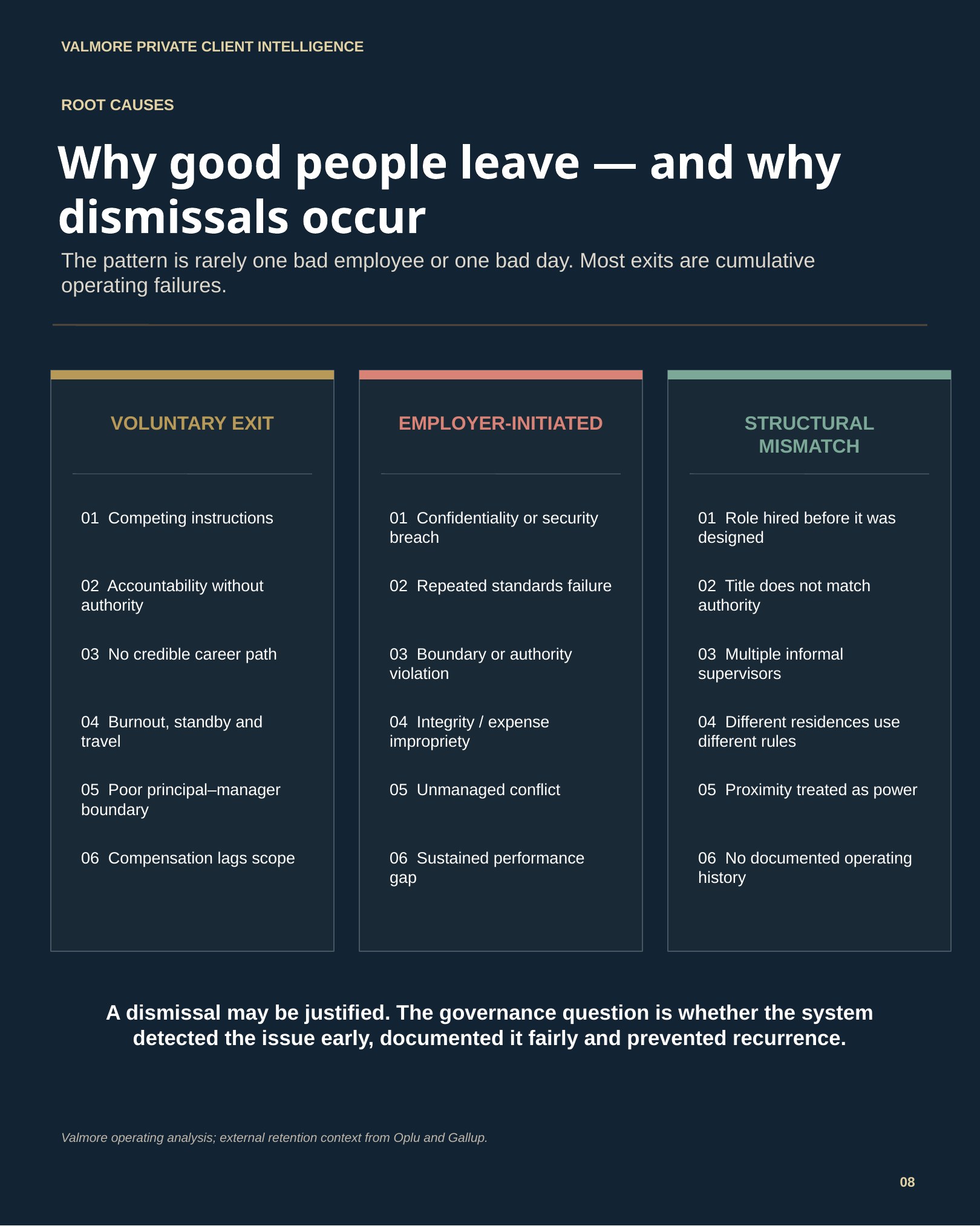
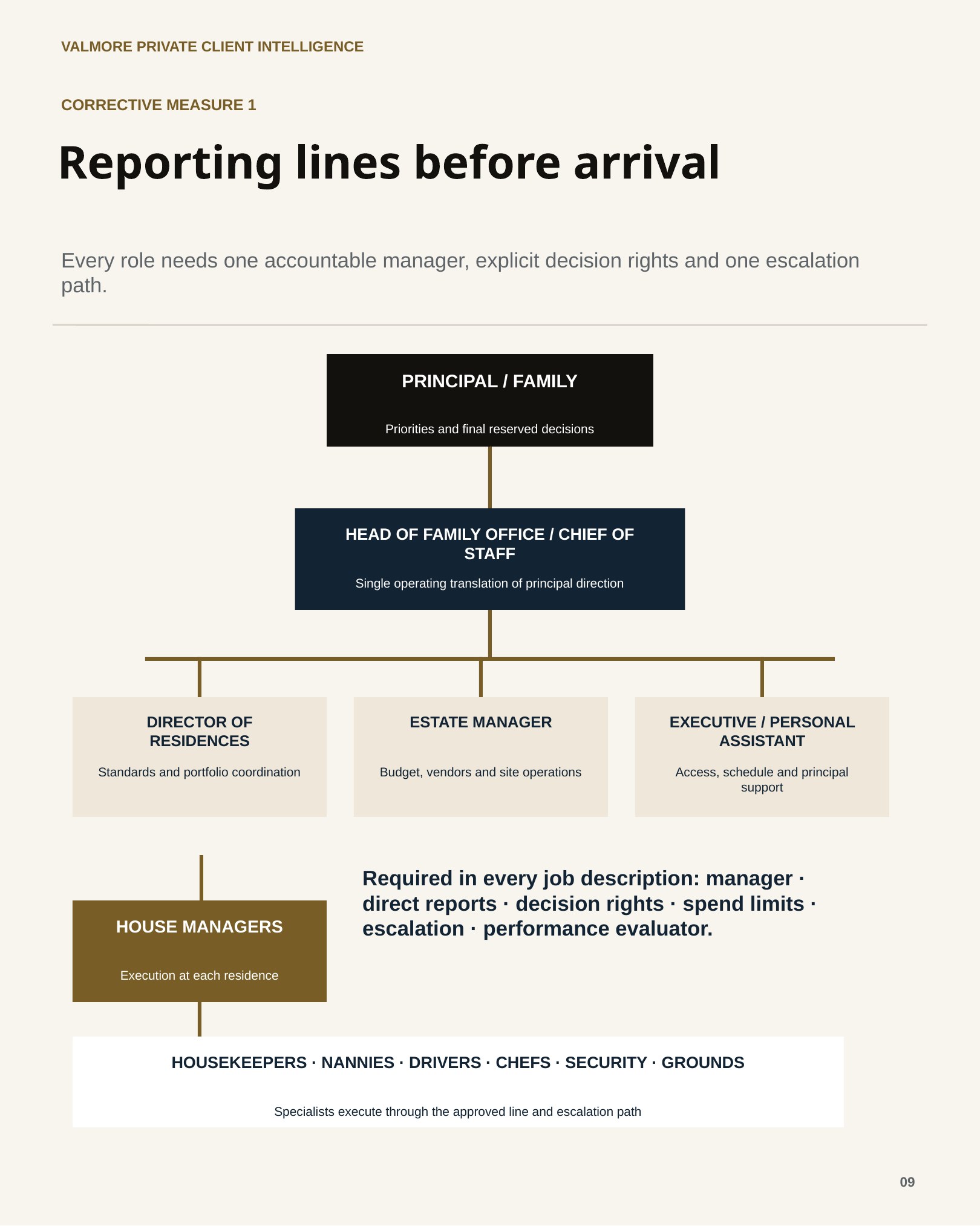
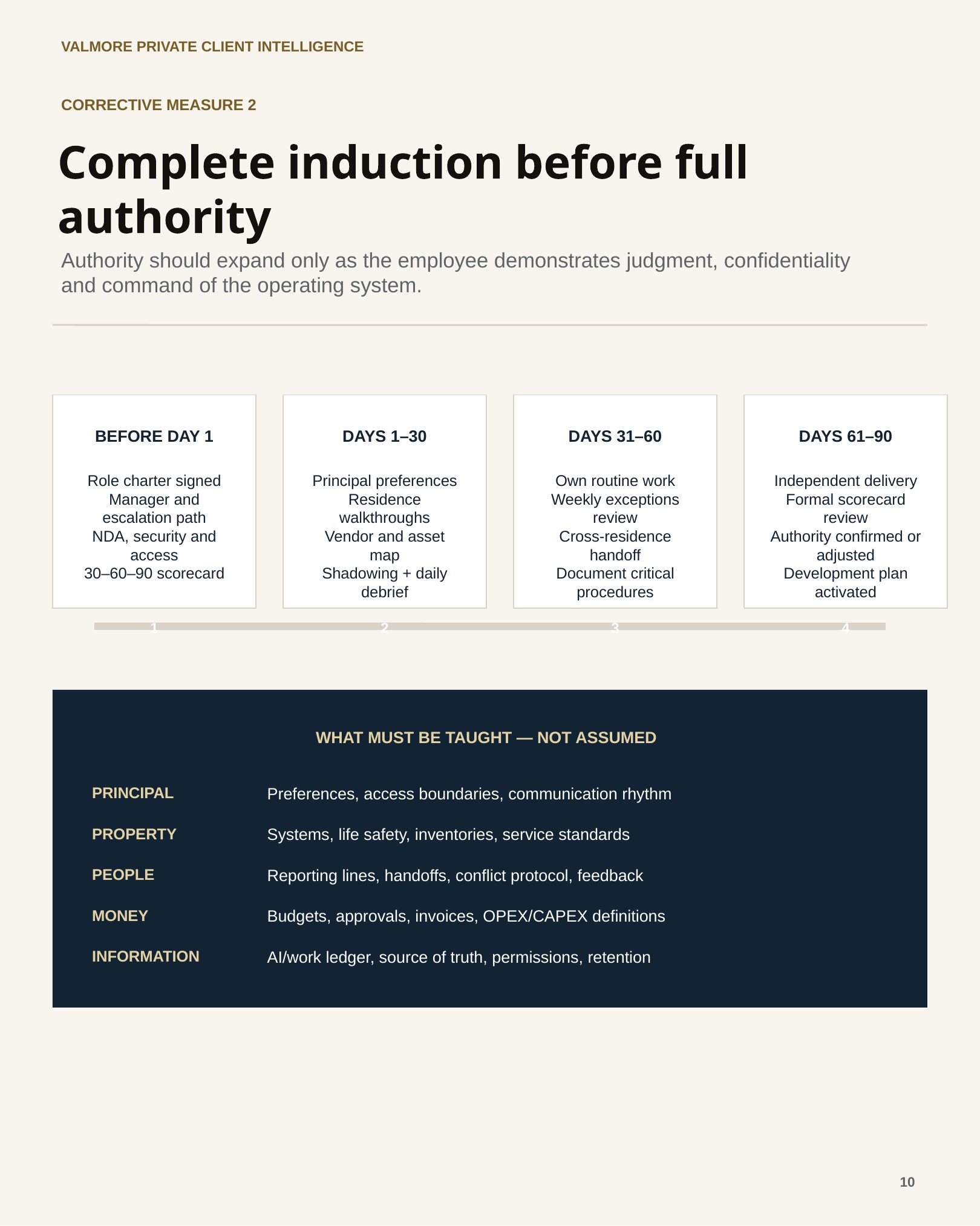
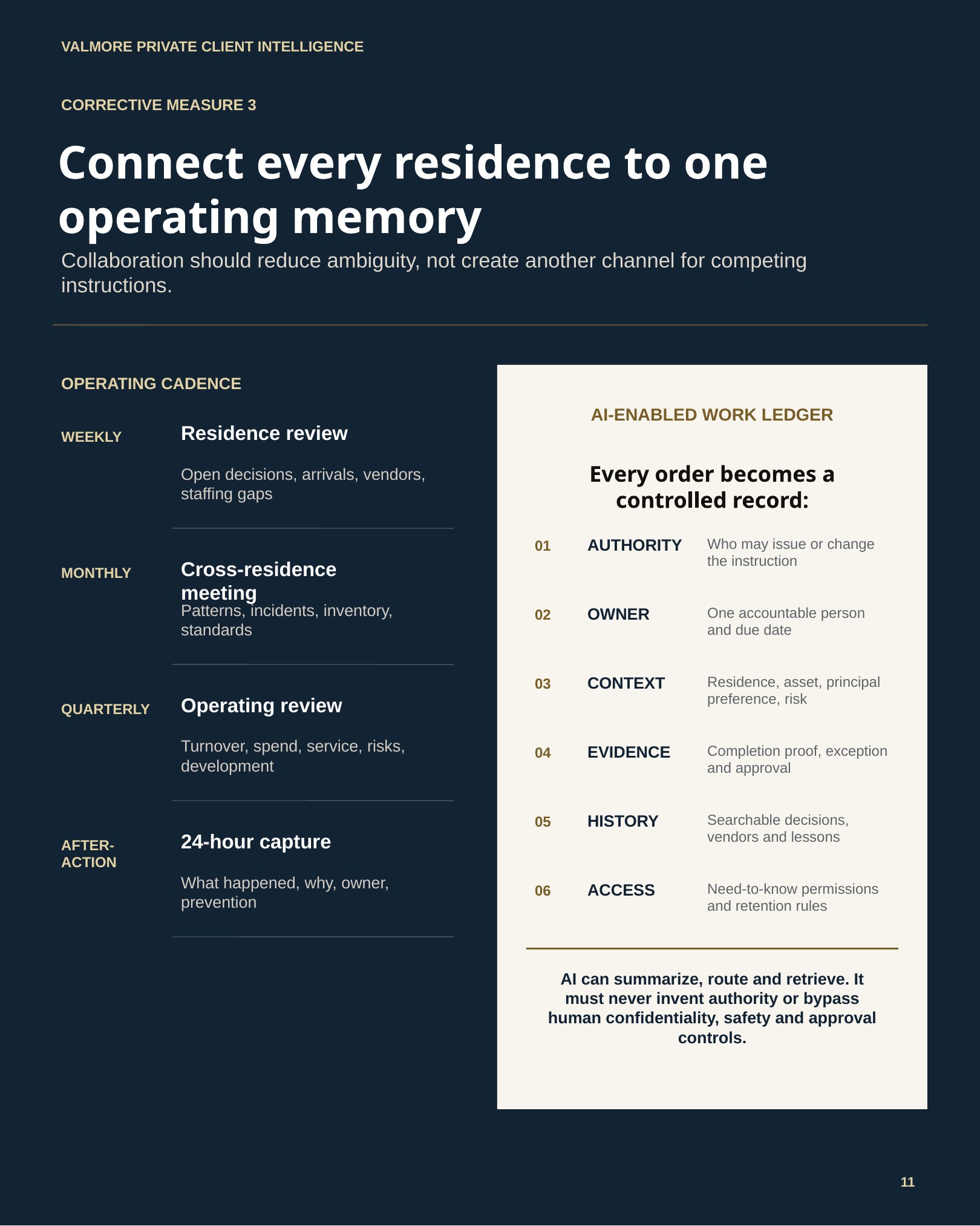
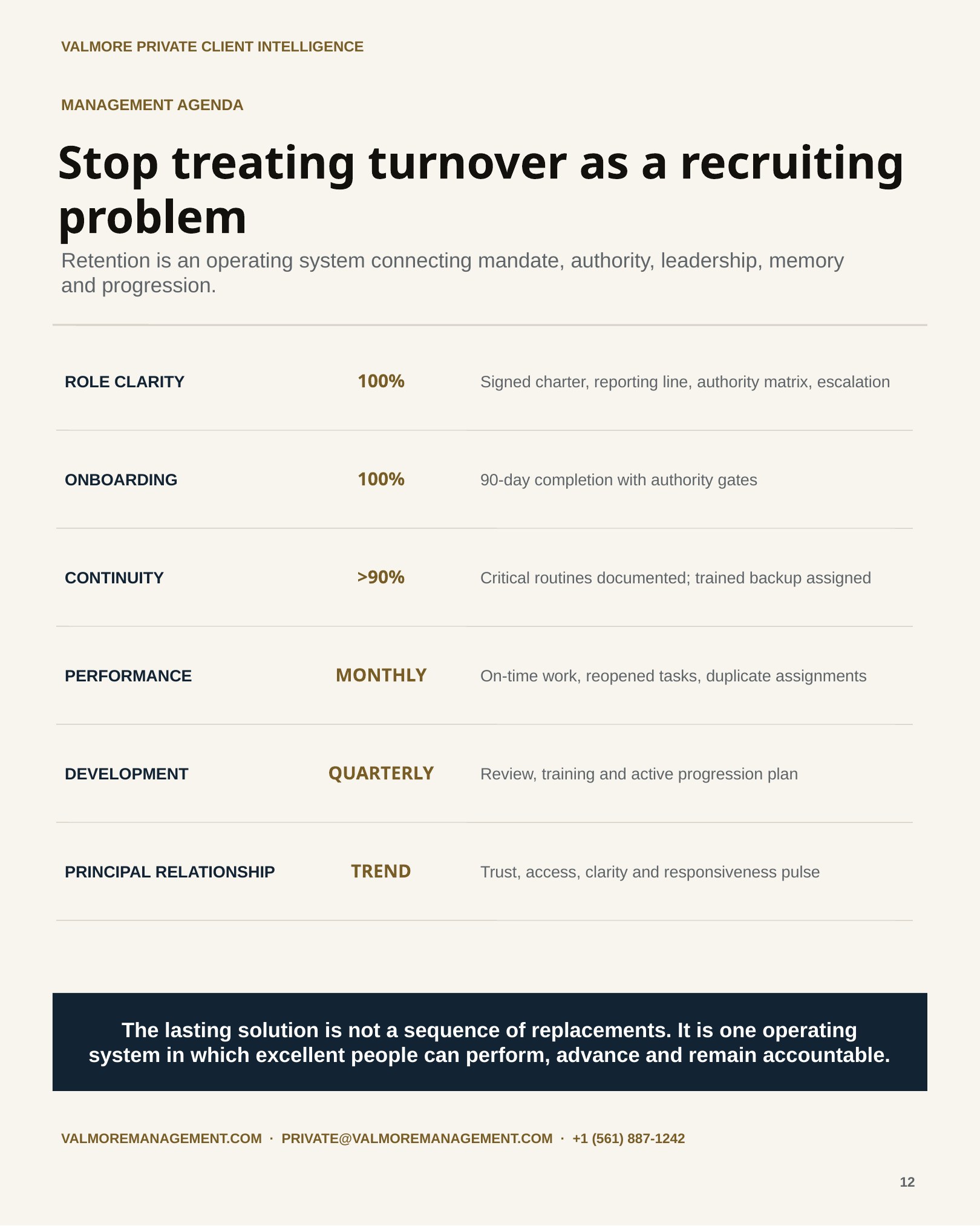
Twenty years ago, an estate manager joined a household and stayed for two decades. Today the average tenure in private service is close to three years. The family notices the resignation letter. It almost never notices the bill.
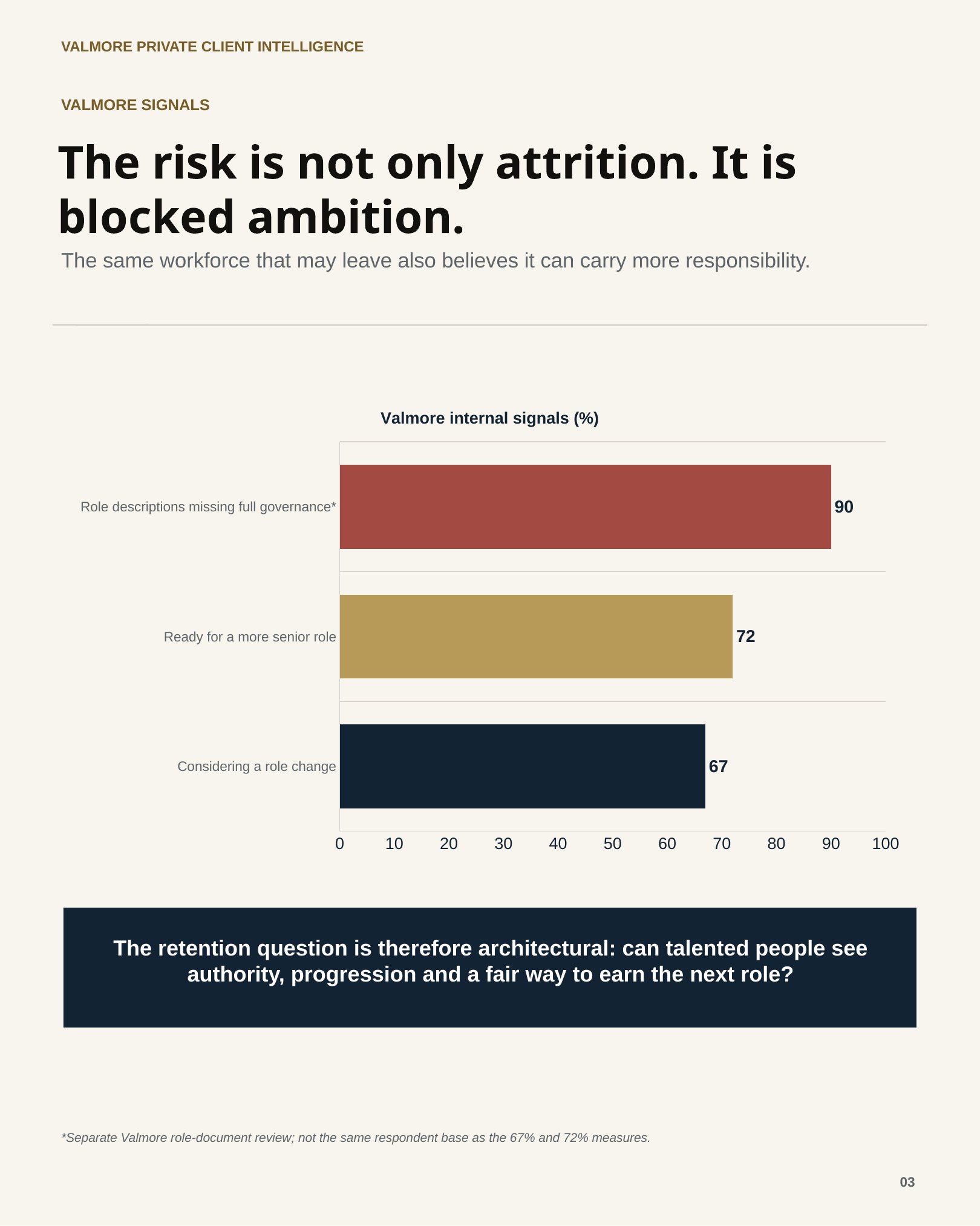
3 years — Average tenure of a senior estate professional in a UHNW household today 20 years — Average tenure a generation ago, before the placement-first model 67% — Private-service professionals actively considering a role change 90% — Household staff operating with no defined reporting line 75% — Agency mandates monetised on placement rather than long-term fit $500,000 — Typical five-year cost of repeated turnover in a single senior seat
Where the half-million comes from
Turnover in a principal residence is not a recruiting line item. It is an operating loss spread across five years and four budgets, and it is almost always booked somewhere other than "staffing".
- Repeat placement fees — the same seat filled two or three times
- Overlap, severance and interim coverage while the seat is open
- Vendor drift: contracts renegotiated by someone who does not know the house
- CAPEX damage: deferred maintenance, warranty lapses, systems nobody owned
- Insurance and compliance exposure during the gap
- Principal's time — the most expensive line, and the only one never invoiced
Add them and a single senior role that turns over twice in five years routinely costs a family between US$300,000 and US$800,000. Our tri-continental study puts the midpoint at roughly half a million dollars.
Nobody is fired for leaving. They are fired for a house that drifted.
The pattern in our data is consistent: terminations are rarely caused by one event. They are the accumulation of small operational failures — a missed inspection, an unmanaged vendor, a schedule that collapsed during season — in an environment where nobody defined what "good" looked like on day one.
Nine in ten household professionals report to no one in particular. There is no job description that survives the first month, no performance review, no escalation path, no calibrated pay band. When something breaks, the person is replaced. The system that broke them stays exactly as it was.
Turnover is not a hiring problem. It is an operating-system failure, and it recurs until somebody redesigns the system.
What actually keeps people
The households that hold their staff for eight, ten, fifteen years share the same four things, and none of them are salary.
- A written role with real scope, boundaries and success measures
- One reporting line: Family Office → Valmore Management → Estate Manager → Principal
- Quarterly reporting on the residence, not just on the person
- A compensation and progression structure that survives year two
The Valmore position
We are not paid at signature and finished at arrival. Placement is the beginning of a mandate: governance design, onboarding, reporting lines, quarterly review, vendor oversight and succession planning. The fee structure only makes sense if the person stays — which is precisely the alignment the placement-first market removed.
Three years is not a market condition. It is the predictable output of a model that was never designed to protect the house.